
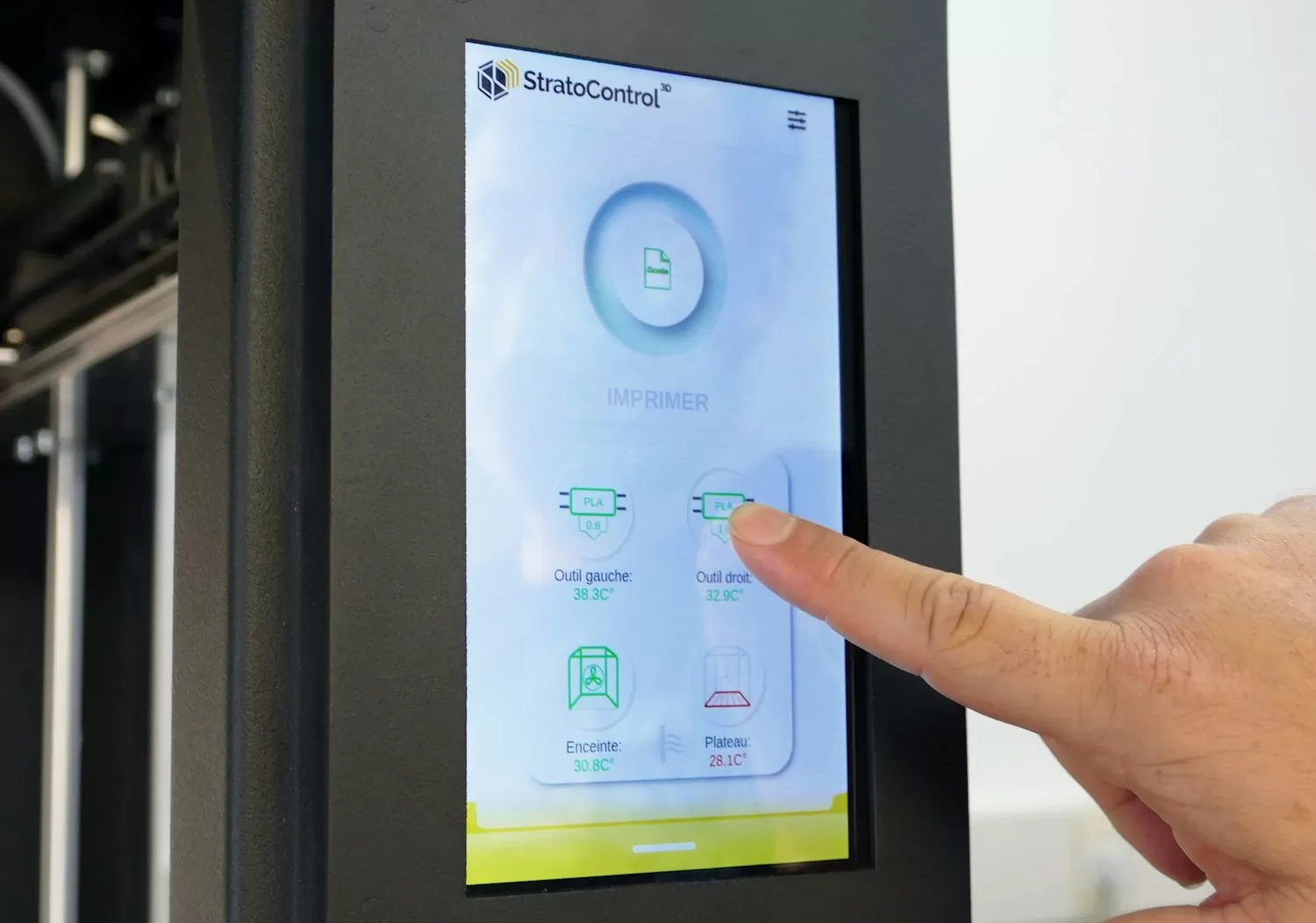
Capacitive touch has replaced mechanical buttons across appliances, industrial panels, and consumer devices — but the gap between a prototype that "works on the bench" and a product that survives a wet kitchen, a gloved operator, and a noisy compressor is where most touch projects stumble. The MCU matters, but layout and tuning discipline matter more.
Choose the silicon by channel count and stack maturity
Touch-capable MCUs differ in how much of the hard work is done for you. Sinomcu(赛元微电子) has built its reputation specifically on touch: its 8-bit SC92 series and 32-bit SC32F series carry dedicated touch-block hardware (charge-transfer measurement with built-in baselining) and, critically, vendor-maintained tuning libraries validated across thousands of appliance designs. When your product is a touch panel — kettle, cooker hood, water heater — that accumulated tuning knowledge is worth more than raw CPU MHz.
Artery(雅特力科技) approaches from the opposite side: AT32 Cortex-M4/M0+ parts with strong general peripherals plus a touch-sense library, ideal when touch is one requirement among many (a motor controller that also has three buttons). One MCU for PWM, USB, CAN, and touch reduces BOM lines.
Electrode and PCB layout rules that survive production
- Keep electrodes away from switching sources. A touch pad 10 mm from a relay or LED driver picks up enough coupled noise to corrupt baselines. Distance is the cheapest EMI fix.
- Hatch, do not pour. Ground fill under and around electrodes should be hatched (typically 15–25% duty), not solid — solid copper increases parasitic capacitance and lowers sensitivity.
- Consistent trace geometry. Route sense traces on an inner layer with equal lengths where possible; mismatched trace capacitance turns into per-channel tuning pain.
- Guard rings for small pads. Driven shield or guard electrodes around sliders and small keys recover sensitivity on thin cover lenses.
Tuning: trust thresholds, not raw counts
Every touch stack reduces to: measure → baseline-track → compare delta against thresholds. The tuning traps:
- Baseline tracking rate must be slower than a finger press but faster than environmental drift. If a slow-touch press trains the baseline up, the key dies mid-press; if too slow, humidity drift causes phantom activations.
- Per-channel thresholds, not global. A key beside the LED backlight and a key in the corner of the panel will never share one threshold.
- Validate across the cover-lens thickness range you actually procure — 0.5 mm tolerance variance across a glass supplier's yield range is enough to flip a marginal channel.
Water: the problem that defines appliance touch
Water on a panel looks like a giant finger. The mature countermeasures, in escalating order:
- Multi-frequency measurement — water and finger return different phase responses; firmware classifies by comparing drive frequencies.
- Adjacency logic — water spreads across many channels simultaneously with low delta each; a finger produces one strong delta. "Many weak channels" → ignore and re-baseline.
- Locked-state windows — after a large wet event (cleaning wipe), freeze and re-baseline rather than trigger.
Sinomcu's appliance-grade libraries implement these as standard options, which is precisely why appliance OEMs keep their parts in 8-bit sockets that Cortex-M0 could fill.
Gloves, EMC, and certification
Thick gloves reduce delta by 3–10×; recover sensitivity with larger electrodes, higher drive voltage, and longer integration — and accept slower response. For EMC, the touch block must tolerate contact discharge per IEC 61000-4-2: series resistors on sense lines, careful shield design, and firmware that recovers from ESD-corrupted measurement cycles rather than latching a stuck key.
Bottom line: pick the MCU family whose touch stack matches your industry's failure modes, then spend your time on layout and tuning discipline — that is where touch products are actually won.
Recommended next steps
If you are sourcing any of the parts mentioned in this guide, we can help you confirm stock, pricing, and lead times quickly.
- Upload your BOM — send your full parts list and receive a consolidated quote within 2 business hours.
- Browse related in-stock lines: Microcontrollers / MCUs.
- Contact our team for hard-to-find or end-of-life components.
