
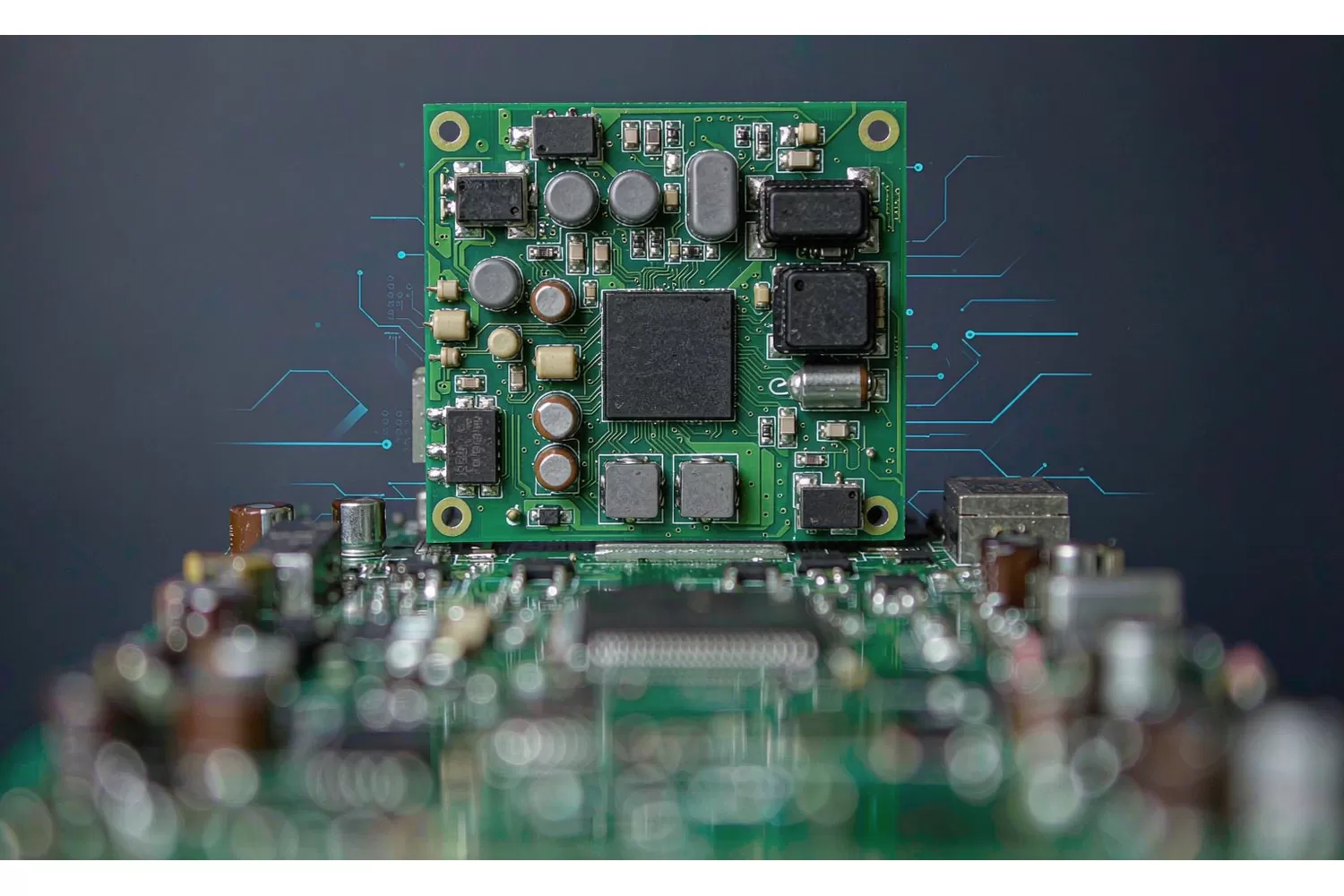
The best power designs fail in the details — the capacitor nobody sized, the LDO that quietly overheats, the switch with no protection. After dozens of real board bring-ups, the same handful of pitfalls show up again and again. This is the checklist we wish every schematic review included.

The pitfalls that actually bite
On a boost, the input capacitor and inductor are sized for an input current higher than the output — get this wrong and the converter rings and radiates. On an LDO, a large drop at modest current cooks a small package; check thermal, not just the headline current. On a multi-rail SoC, sequencing is not optional. And on any load switch, protection and diagnostics separate a robust design from a field failure. A solid main buck such as the TPS54622 is only as good as the stage built around it.
Building a robust bill of materials
Start from the rail: voltage, current, ripple. Pick the topology — buck for a big step-down, LDO for a quiet low-drop section, boost for a battery rail, PMIC for a sequenced multi-rail SoC. Then specify the passives and protection as first-class line items, not afterthoughts. For the always-on and protection side, pair a low-noise LDO such as the TPS7A4700 with a protected switch such as the BTS723GW, and a proper gate driver such as the IR2103S with its switch such as the IKW40N120CS6. Every one of these lines is a single-source risk to check.
Sourcing is part of the design
A schematic is not shippable until every line can be bought. Power semiconductors and LDOs go on allocation; a protected switch or a scarce diode can stall a whole build. We supply the complete power bill — regulators, PMICs, switches, MOSFETs/IGBTs, drivers and diodes — from traceable channels with date-code and inspection discipline, so a design becomes a product.
Sourcing for a long-lived supply chain
Send us your complete power line items and quantities. We quote availability, date code and inspection options (visual, X-ray, electrical test) before you commit to volume, and we flag any single-sourced part so you can plan a second source.
Frequently asked questions
What are the most common power-supply design mistakes?
Undersizing the input capacitor on a boost, ignoring thermal on an LDO, skipping inrush control on a hot-plug rail, forgetting sequencing on a multi-rail SoC, and leaving a power switch without protection or diagnostics. Most failures trace back to the parts around the regulator, not the regulator itself.
How do I build a robust component shortlist?
Start from the rail requirements (voltage, current, ripple), pick the topology (buck/LDO/boost/PMIC), then specify the supporting passives and protection as part of the same bill. Verify quiescent current for battery life and thermal for the worst-case drop. Cross-check every line for single-source risk.
Why does sourcing matter as much as design?
A perfect schematic stalls if one allocated regulator or one scarce protection device cannot be bought. Sourcing from traceable channels with date-code and inspection discipline is what turns a design into a shippable product, especially during allocation cycles.
Can you help source a complete power bill of materials?
Yes. We supply regulators, LDOs, PMICs, switches, MOSFETs/IGBTs, gate drivers and the supporting passives and diodes commonly referenced in power designs. Send the full line items and quantities for a consolidated quote.
About us & trademarks: JTDZ Tech (Shenzhen Jingteng Electronics Technology Co., Ltd.) is an independent distributor of electronic components. We are not an authorised distributor or representative of the manufacturers named in this article. Manufacturer and part names are used for indicative purposes only, to help identify the components discussed; all trademarks remain the property of their respective owners. Always verify specifications against the manufacturer's datasheet before design-in or purchase.
