
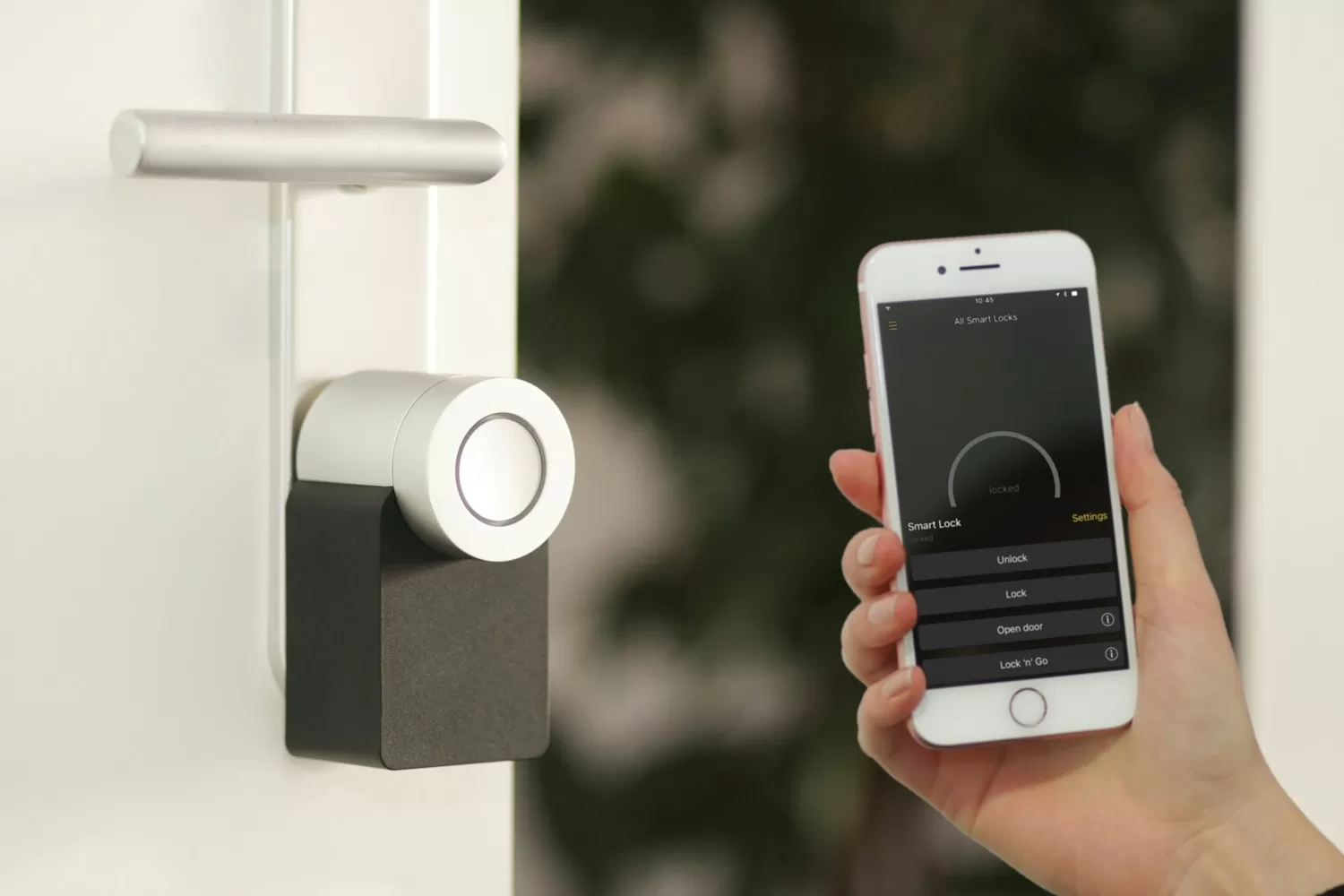
Open up the average small appliance shipped in the last two years - a kettle, an air fryer, a smart lock, an electric toothbrush charger - and the internals tell a consistent story: electromechanical switches and hand-wired control boards are being replaced by three quiet technologies. None of them show up on the marketing box, but each changes the bill of materials in ways component buyers should understand.
Touch interfaces replace switches
Capacitive touch keys have fallen in cost to the point where they are cheaper than a sealed mechanical button once waterproofing is priced in - there is no opening in the enclosure to seal. MCUs with integrated touch peripherals, such as the Sinomcu (赛元) touch series popular in kitchen appliances and personal care products, do the channel scanning, baseline tracking, and threshold decisions on-chip, so the firmware team inherits a working interface rather than building one from an analog front end. The sourcing consequence: the touch controller is no longer a separate purchase line, and the qualification question shifts from "does the chip work" to "does it work through 3 mm of glass with a film of water on it." Always test with a wet cover, because hydrated glass is exactly the failure case a kitchen product will meet on day one.
Magnetic sensing replaces mechanical interlocks
Lid detection, door position, water-level float replacement, speed and position feedback in brushless fans - each of these used a microswitch or a reed relay, each with moving parts and a mechanical life rating. Hall-effect switches and latches now do these jobs with no wear-out mechanism at all. Parts in the MST (美伽) MH family, for example, provide chopper-stabilized unipolar and latched switching with the sensitivity options that let one design cover lid-closed detection on a blender and speed feedback on a fan motor. The engineering caveats are magnetic, not electrical: stray fields from nearby motors and magnets shift the operate point, so the threshold budget must be specified against the worst-case magnet tolerance and temperature, not the nominal one.
The cable becomes the power supply
Perhaps the most consequential shift is power architecture. USB-C Power Delivery lets a mainstream 65 W phone-laptop charger power a blender base, a desk fan, or a smart lock gateway - and the appliance needs only a PD sink controller and a DC-DC stage instead of a custom AC-DC supply. Sink controllers such as the Enchip (能芯) ECP5701 negotiate the voltage contract and handle the connector logic, while downstream regulation - a buck converter and an LDO from the Yita (钰泰) ETA catalog - produces the internal rails. The arithmetic is persuasive: a PD sink path costs a fraction of a certified AC-DC module, removes the mains-side safety qualification from most of the product, and gives the same SKU a global charger story.
What this means for BOM strategy
- Consolidate suppliers, not just parts: vendors covering multiple of these categories simplify qualification and consolidate forecasts.
- Qualify against abuse, not datasheet: wet glass, stray magnets, and wrong-way chargers are the real test cases for these three technologies.
- Watch the second source: each category now has at least two credible domestic suppliers, which is precisely the leverage that keeps incumbent pricing honest.
The appliances themselves are not getting computers - they got those years ago. What is new is that the sensing, interface, and power layer underneath has quietly become a commodity with multiple healthy supply sources, and the teams that notice first are pricing these products more aggressively than everyone else.
Recommended next steps
If you are sourcing any of the parts mentioned in this guide, we can help you confirm stock, pricing, and lead times quickly.
- Upload your BOM — send your full parts list and receive a consolidated quote within 2 business hours.
- Browse related in-stock lines: Interface Chips / RF Chips.
- Contact our team for hard-to-find or end-of-life components.
