
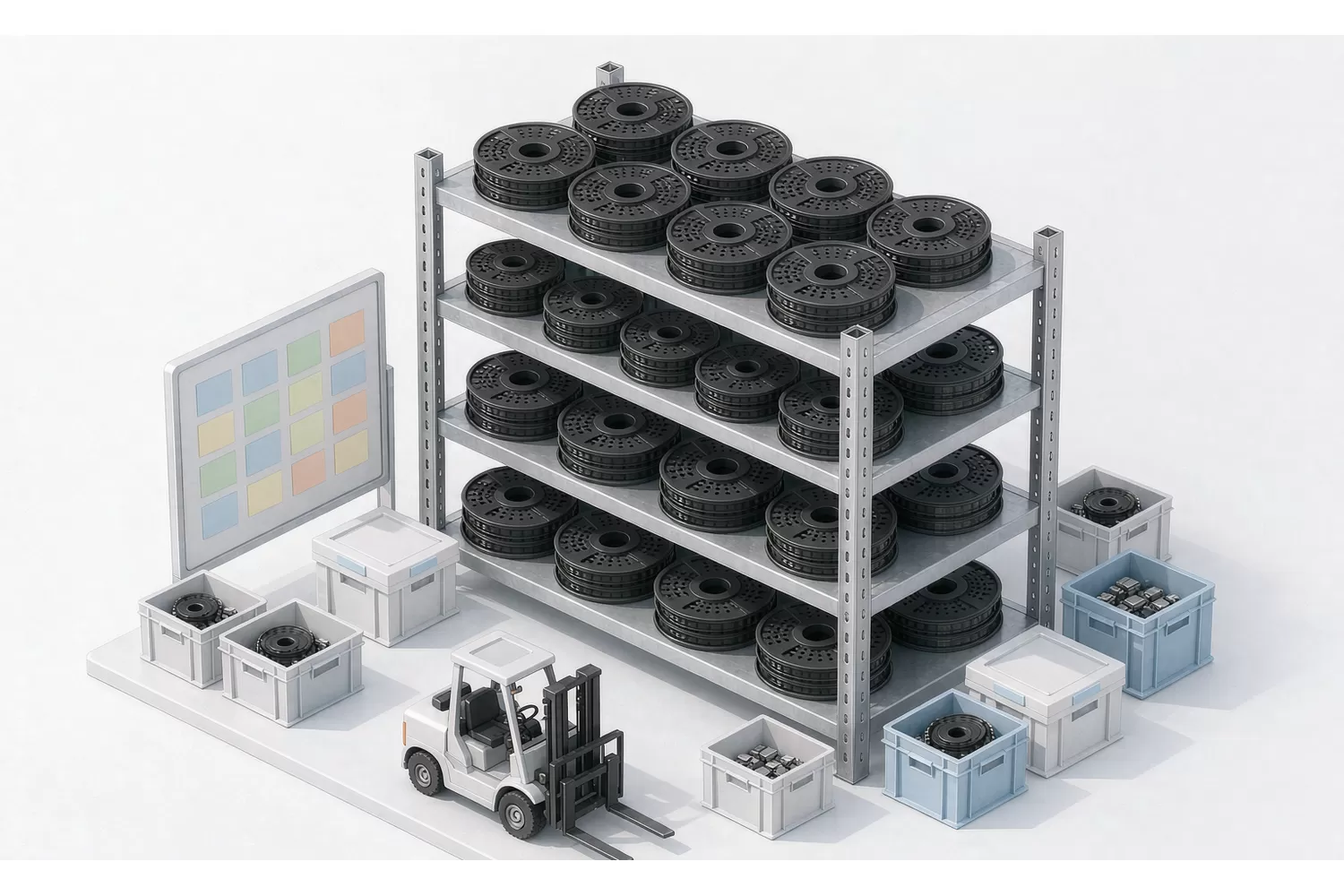
For a business that would rather trade than hold inventory, the microcontroller is the component that most tempts a stockpile — and the one where a stockpile most easily traps cash. The AT32 family is broad enough that lead-time risk can be managed with package discipline and a qualified fallback, instead of with a warehouse. This article is a procurement view, written for buyers who want continuity without dead stock.

Parts in scope: AT32F403ACGT7, AT32F423RCT7, AT32F425C8T7 and AT32F435ZGT7.
The package is the lead-time, not the die
When demand tightens, it is the larger, finer packages that sit in allocation first. LQFP100 and LQFP64 lead, LQFP48 follows, and smaller footprints such as QFN32 or LQFP32 tend to stay more available because they serve high-volume, standardised designs. The practical move is to prefer a mainstream package wherever the design allows, because that choice is made once and pays back on every reorder.
Keep a fallback qualified before you need it
A second AT32 member in the same package, with shared peripheral drivers, is the cheapest insurance there is. Because the AT32 SDK keeps the peripheral API consistent across the family, shifting volume to the fallback is a re-point, not a re-spin. Qualify it on the bench during development, not during a shortage, when bench time is free and panic is not.
| Risk control | What it costs you | What it protects |
|---|---|---|
| Standardise package | Minor design constraint | Shorter, more stable lead time |
| Small rolling safety stock | A little working capital | Continuity through a spike |
| Pre-qualified fallback part | A few days of bench time | No board change under shortage |
| Last-time-buy on forecast | Cash only if consumed | Lifecycle continuity |
Size stock to lead behaviour, not to fear
Use the part's real lead time and your consumption rate: hold enough to cover the gap between ordering and receiving, plus one reorder cycle of buffer, and recompute when lead times move. Zero buffer turns every spike into a line-down event; a blanket large buffer traps cash in slow parts. The middle is a number you can defend.
Last-time-buy on a forecast, not a rumour
A last-time-buy is a final factory window before discontinuation. Trigger it from a real lifetime forecast, and only for parts you will genuinely consume. Buying to the forecast protects the build; buying to the fear ties up cash in parts that may never ship. The discipline that matters is forecasting, not hoarding.
See Microcontrollers and MCUs for the full range, including the AT32F421C8T7 and AT32F426CBT7.
Frequently asked questions
Which AT32 packages carry the longest lead risk?
Larger packages with more pins and finer substrate tend to sit longer in allocation when demand spikes: LQFP100 and LQFP64 are the usual suspects, followed by LQFP48. Smaller footprints such as QFN32 or LQFP32 are generally more available because they serve higher-volume, more standardised designs. The package, not the die, is what bites you on lead time.
How should I reduce lead-time risk without holding dead stock?
Standardise on mainstream packages wherever the design allows, keep a small rolling safety stock of the slowest-moving package, and qualify a second AT32 member in the same package as a fallback before you need it. None of these is large inventory; they are insurance sized to the part's actual lead behaviour, not a blanket stockpile.
What is a last-time-buy and when do I trigger it?
A last-time-buy is a final factory window before a part is discontinued. Trigger it from a real lifetime forecast, not from a rumour, and only for parts you will genuinely consume. Buying to the forecast protects the build; buying to the fear ties up cash in parts that may never ship. The discipline is forecasting, not hoarding.
Should I qualify a second source within the AT32 family?
Yes, and the cheapest time is before you are stuck. A second AT32 member in the same package, with shared peripheral drivers, lets you shift volume without a board change. Because the AT32 SDK keeps the peripheral API consistent, the software cost of the fallback is small compared with qualifying a completely different vendor.
How do I size safety stock without breaking the budget?
Use the part's real lead time and your consumption rate: stock enough to cover the gap between placing an order and receiving it, plus one reorder cycle of buffer. Recompute when lead times move. The mistake is either zero buffer (every spike is a line-down) or a blanket large buffer (cash trapped in slow parts). Size to the lead behaviour, not to fear.
About us & trademarks: JTDZ Tech (Shenzhen Jingteng Electronics Technology Co., Ltd.) is an independent distributor of electronic components. We are not an authorised distributor or representative of the manufacturers named in this article. Manufacturer and part names are used for indicative purposes only, to help identify the components discussed; all trademarks remain the property of their respective owners. Always verify specifications against the manufacturer's datasheet before design-in or purchase.
价格随采购数量与行情流动,所示价格仅供参考。欢迎询价获取实时报价,量大从优。
