
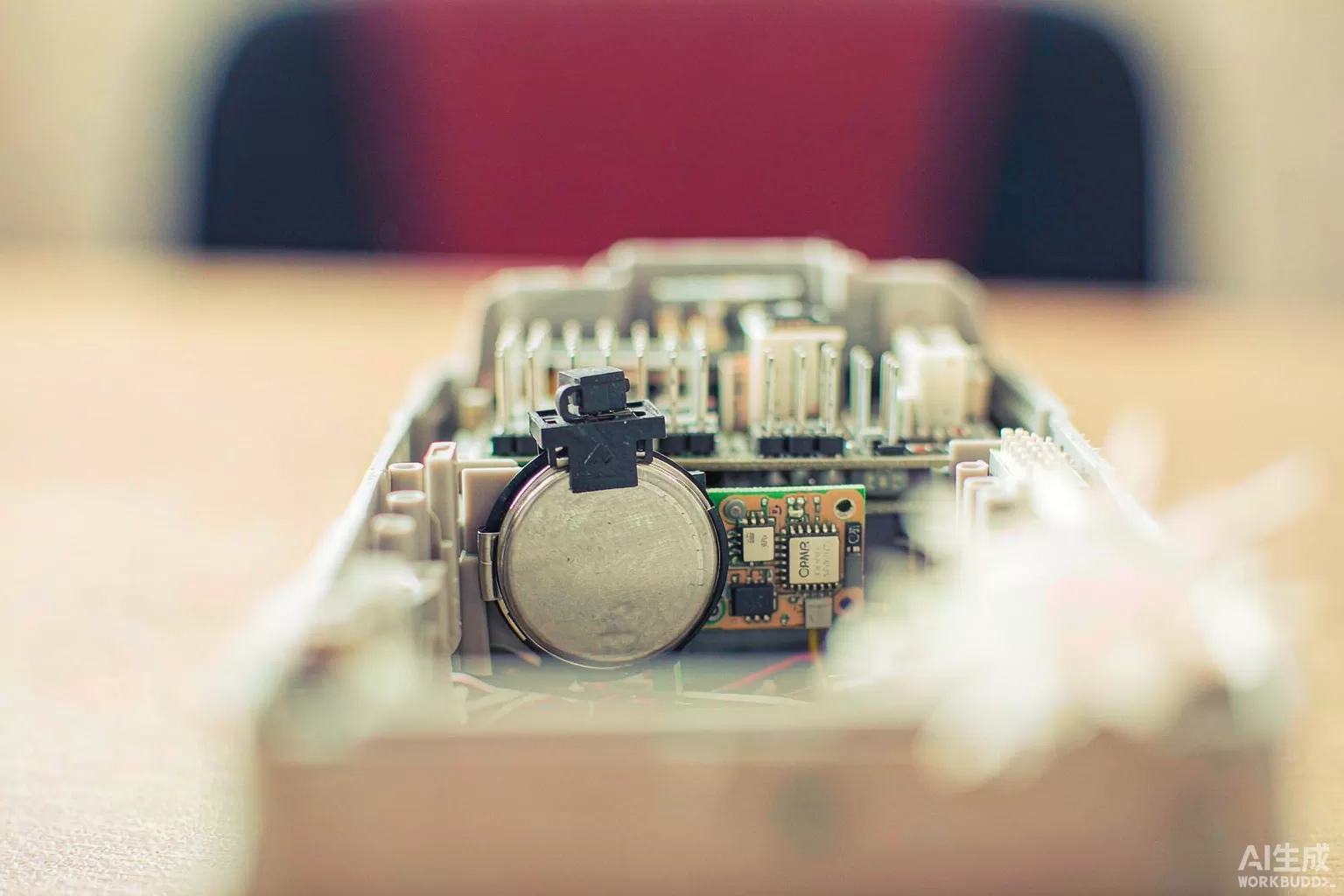
For battery-powered and energy-harvesting products, the amplifier that draws the least current when it is not switching is often the one that decides your runtime. A micro-power operational amplifier with nanoamp-scale quiescent current lets you condition a small signal without burning the budget.
Power versus speed is a real trade-off
Quiescent current and bandwidth come from the same bias decisions. A nanopower part may offer a gain-bandwidth product of only a few hundred kHz, which is perfect for DC and slow sensor paths but useless for AC coupling or high-speed work. The design rule is simple: choose the slowest amplifier your signal still tolerates.
Where they earn their keep
Wireless sensor nodes, portable medical devices, gas and environmental loggers, and any always-on low-rate front-end benefit directly. Pair them with a low-leakage reference and high-impedance, low-drift sensing elements to avoid spending the savings elsewhere.
Available options
In the COSINE amplifier portfolio we stock, COS6001, COS9001, COS9041 and COS379 are micro-power and nanopower amplifiers spanning single to quad packages and supply voltages down to 1.8 V — well matched to coin-cell and single-cell Li-ion rails.
One caveat: very low bias current makes these parts sensitive to PCB leakage and dirty fluxes, so keep input nodes clean and guarded.
Alternative & Cross-Reference Parts (for reference)
The devices below are commonly used industry parts in the same functional class. They are listed for identification and compatibility-engineering reference only. A cross-reference is not a guarantee of pin-to-pin or 100% functional equivalence — package, pinout, electrical parameters and temperature drift can differ between devices. Always verify against the original manufacturer's datasheet before substituting any part.
| Manufacturer | Typical part(s) | Class / note |
|---|---|---|
| Texas Instruments | LPV801 / LPV811 | <1 µA nanopower, RRIO |
| Texas Instruments | OPA391 | Low-power, RRIO |
| Analog Devices | AD8500 / AD8502 / AD8504 | <1 µA sub-µA |
| Analog Devices | ADA4505 | <1 µA, RRIO |
| STMicroelectronics | TS881 | Nano-power |
| Maxim Integrated | MAX9914 | Low-power, RRIO |
Mentioned brands (Analog Devices®, Texas Instruments®, Maxim Integrated®, Microchip®, STMicroelectronics®) are trademarks of their respective owners. Jingteng Electronics is an independent distributor and is not affiliated with, authorized by, or an agent of any semiconductor manufacturer.
Related COSINE Precision Amplifiers In Stock
| Part number | |
|---|---|
| COS6001 micro-power | Check stock & quote |
| COS9001 micro-power | Check stock & quote |
| COS9041 micro-power | Check stock & quote |
| COS379 micro-power | Check stock & quote |
Frequently Asked Questions
What quiescent current can I expect?
Micro-power and nanopower op-amps typically draw from a few hundred nanoamps down to well under 1 µA per amplifier, versus tens or hundreds of µA for general-purpose parts — a 100× to 1000× reduction in idle draw.
Does low power mean low bandwidth?
Usually, yes. Power and speed are linked: a nanopower part may have a gain-bandwidth product of a few hundred kHz, fine for slow sensor and DC paths but inadequate for AC or high-speed work. Pick the slowest part your signal still allows.
Can I run them on a coin cell?
Yes, and that is the main use case. Their low Iq lets a CR2032 or small Li-ion cell run a conditioning front-end for months or years, especially in duty-cycled or always-on low-rate logging.
Recommended next steps
If you are sourcing any of the parts mentioned in this guide, we can help you confirm stock, pricing, and lead times quickly.
- Upload your BOM — send your full parts list and receive a consolidated quote within 2 business hours.
- Browse related in-stock lines: Amplifiers / Data Conversion · Power Management ICs.
- Contact our team for hard-to-find or end-of-life components.
Trademark & Cross-Reference Notice
COSINE (科山芯创) is a registered trademark of its respective owner. References on this page to COSINE part numbers, and any comparison to devices from other manufacturers, are provided for identification and compatibility-engineering purposes only, indicating the function, package and parametric class a given part belongs to. Jingteng Electronics (Shenzhen) is an independent distributor, not an authorized agent or affiliate of COSINE or any other semiconductor manufacturer. A cross-reference does not imply pin-to-pin or 100% functional equivalence; before substituting any device, verify the package, pinout, electrical parameters and the original datasheet. Product availability, pricing and date code are confirmed at quotation.
About Jingteng Electronics
Jingteng Electronics (Shenzhen Jingteng Electronics Technology Co., Ltd.) is an independent distributor of electronic components, focused on hard-to-find and obsolete ICs, analog and mixed-signal devices. We source through long-verified, traceable channels and support BOM matching, small-lot sampling and volume inquiries. Contact us for a quote, or upload your BOM for a consolidated quote.
