
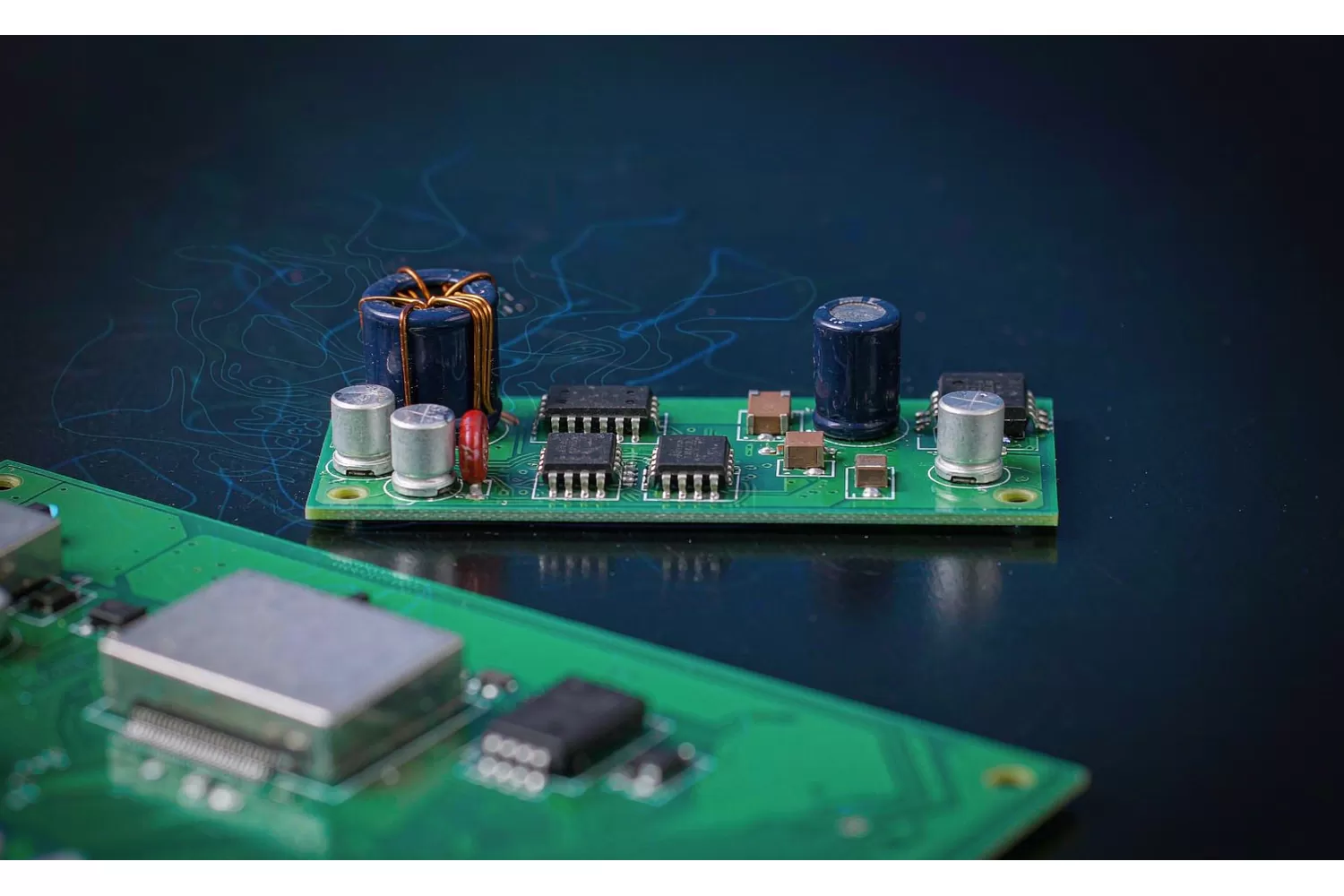
A boost converter solves the opposite problem to a buck: it takes a voltage that is too low and raises it. That sounds simple, but it underpins a huge share of portable electronics, because batteries spend most of their lives at a voltage below the rail the system needs.

Why boost, not just a bigger battery
A single Li-ion cell sits around 3.0–4.2 V and spends much of its discharge below 3.6 V. Many systems still need a 5 V or 12 V bus — for USB, for a display bias, for a sensor. A boost converter lets a small cell deliver that rail and keeps it stable even as the cell empties, which is exactly what extends usable battery life. Devices such as the TPS61080 are commonly referenced for this kind of high-current step-up, while combined buck-boost parts such as the TPS65131 handle rails that must stay regulated both above and below the battery line.
The trap: input current is higher than output
In a boost, the input current exceeds the output current by roughly the ratio of output to input voltage divided by efficiency. Under-specifying the input capacitor or the inductor is the most common cause of boost-converter instability and EMI. We make sure the bill of materials around the IC — the inductor, the input/output caps, the schottky — is sourced complete, not just the controller.
Efficiency at light load
Battery devices spend a lot of time idle. A boost that is efficient only at full load will still drain the cell in standby. Parts with a power-save or pulse-skip mode, and the downstream TPS54331 style buck for the main rail, are how designers balance active efficiency against standby draw. Browse the power management chip range for the regulators and supporting parts.
Sourcing for a long-lived supply chain
Tell us the boost controller, the inductor value and the capacitor types your schematic calls for. We quote availability, date code and inspection options so a portable design does not stall on a single allocated line.
Frequently asked questions
What does a boost converter do?
A boost converter steps a lower input voltage up to a higher, regulated output. Like a buck it switches and uses an inductor, but arranged so the output is above the input. It is essential whenever a single low battery must supply a higher rail.
Where are boost converters used?
Single-cell Li-ion or multi-cell stacks feeding a 5 V or 12 V rail, battery-powered LED drivers, sensor systems that need a higher bias voltage, and any portable device where the battery voltage sags below the required rail as it discharges. A boost keeps the output stable even as the cell empties.
What should I watch out for in a boost design?
The input current is higher than the output current, so the input capacitor and the inductor must be sized for that. Efficiency at light load matters for battery life, so many boost ICs offer a power-save mode. Output over-voltage protection and inrush current control also need attention.
Can you supply boost regulators and related power parts?
Yes. We stock boost (step-up) regulators, charge-pump and combination buck-boost devices commonly referenced in battery-powered designs. Send the exact part numbers and quantity for a quote.
About us & trademarks: JTDZ Tech (Shenzhen Jingteng Electronics Technology Co., Ltd.) is an independent distributor of electronic components. We are not an authorised distributor or representative of the manufacturers named in this article. Manufacturer and part names are used for indicative purposes only, to help identify the components discussed; all trademarks remain the property of their respective owners. Always verify specifications against the manufacturer's datasheet before design-in or purchase.
