
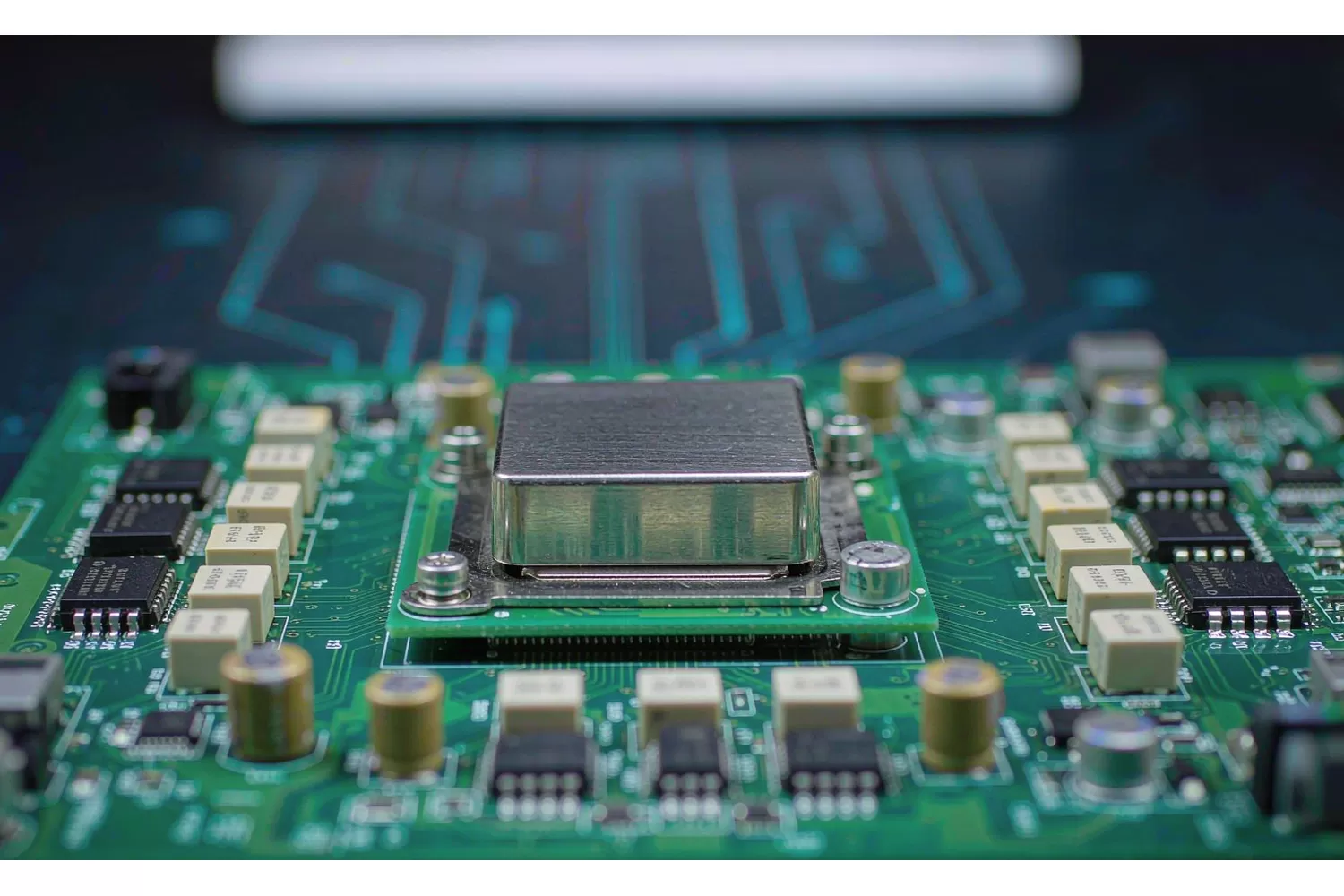
As systems grew from a single 5 V rail to a dozen sequenced supplies, the discrete regulator gave way to the PMIC — a power management IC that folds several regulators, sequencing and protection into one package. For a dense embedded or industrial board, a PMIC is often the difference between a clean power tree and a parts nightmare.

What a PMIC buys you
Instead of populating five regulators, a designer drops in one IC that brings up the core, the I/O, the memory and the analog rails in the right order. That order — sequencing — is not cosmetic: powering a core before its I/O, or ramping too fast, can stress components or corrupt boot. A PMIC encodes that knowledge. Supporting parts such as the TPS54302 buck, the TPS7A4700 LDO and the TPS65131 boost/buck-boost cover the rails a PMIC may not integrate.
Choosing and validating
The headline numbers — rail count, voltages, input range — are only the start. Quiescent current decides battery standby, and the reference design decides whether your layout will be stable. We stock PMICs and the regulators and drivers that sit around them, and we supply from traceable channels with date-code verification so a complex power tree is not exposed to a single unavailable line.
Industrial and embedded context
In industrial controllers and embedded gateways the PMIC shares the board with microcontrollers and interface parts. Designers often cross-link the MCU range and the power management range when planning a build. We can quote the full set so the power tree and the logic are sourced together.
Sourcing for a long-lived supply chain
Send us the PMIC part number plus the discrete regulators and drivers in your schematic. We quote stock, date code and inspection options (visual, X-ray, electrical test) before you commit to volume.
Frequently asked questions
What is a PMIC and why use one?
A PMIC (power management IC) integrates several regulators, sometimes with sequencing, battery charging, and protection, into a single device. It replaces a board full of discrete regulators with one part, saving space and simplifying power-up sequencing in complex systems.
Where do PMICs show up?
Embedded systems, industrial controllers, set-top boxes, networking gear and automotive modules all use PMICs to manage multiple rails from one source. They are especially valuable where board space is tight and several rails must come up in a defined order.
What do I need to check before choosing a PMIC?
The rail count and voltages it must provide, the input source (battery, USB, 12 V bus), sequencing requirements, and quiescent current. Because a PMIC is a system in itself, the evaluation board and the reference design matter as much as the datasheet headline.
Can you supply PMICs and the regulators around them?
Yes. We stock integrated power management ICs and the supporting buck/LDO/gate-driver parts commonly referenced alongside them. Send the exact part numbers and quantity for a quote.
About us & trademarks: JTDZ Tech (Shenzhen Jingteng Electronics Technology Co., Ltd.) is an independent distributor of electronic components. We are not an authorised distributor or representative of the manufacturers named in this article. Manufacturer and part names are used for indicative purposes only, to help identify the components discussed; all trademarks remain the property of their respective owners. Always verify specifications against the manufacturer's datasheet before design-in or purchase.
