
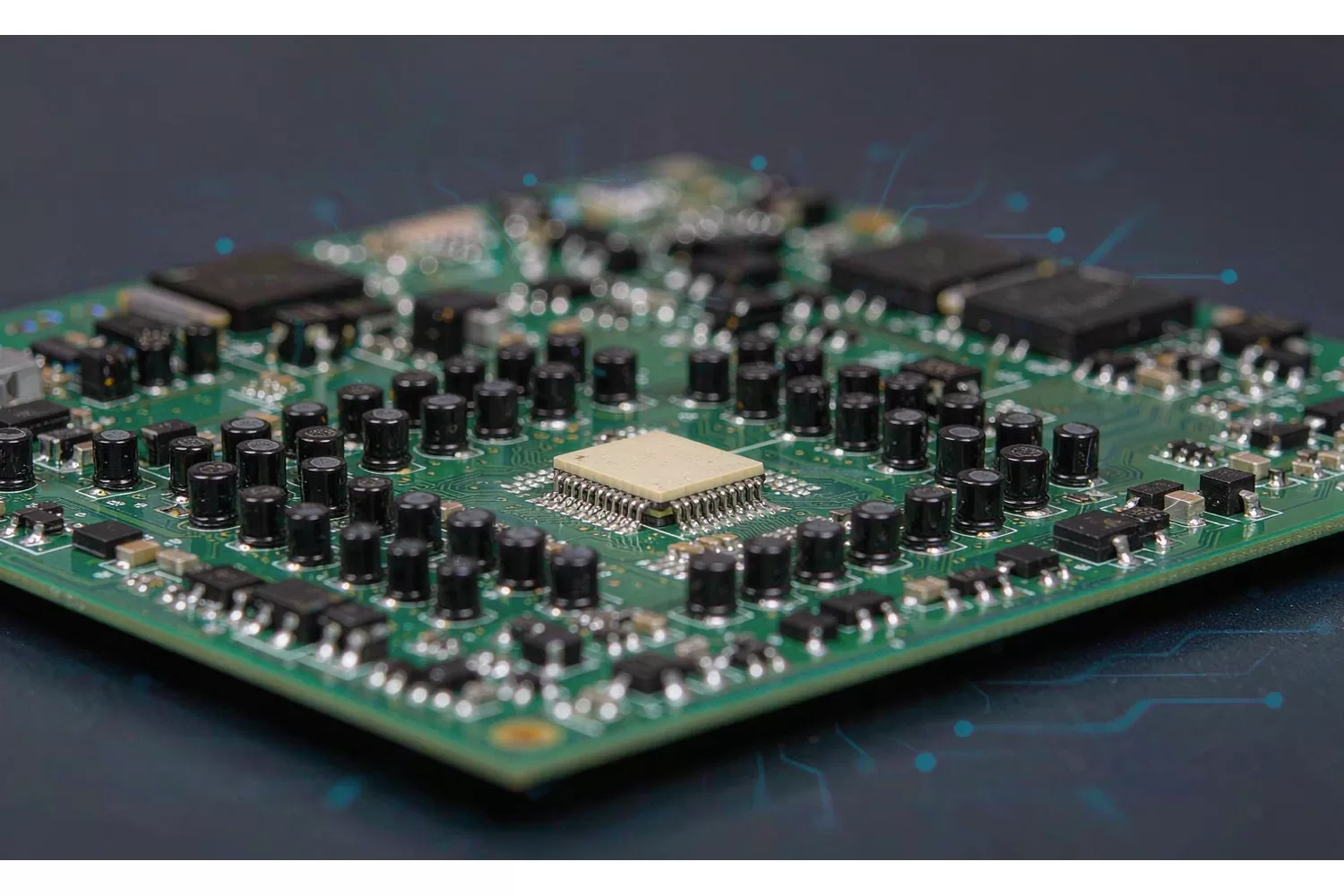
If the buck converter is the efficient workhorse of power design, the LDO is the quiet, dependable assistant. A low-dropout linear regulator does not switch — it simply drops the excess voltage across a pass transistor — so it produces almost no switching noise and needs only a couple of capacitors. That makes it irreplaceable in the places where cleanliness matters more than efficiency.

Where LDOs earn their place
The classic use is post-regulating a buck output to feed a sensitive block: a precision ADC, a voltage-reference driven section, a PLL or a RF local oscillator. A buck can be efficient but a little noisy; an LDO in the chain removes most of that noise. LDOs are also the natural choice for a low-current rail — a 3.3 V supply for a microcontroller's analog section or a 1.8 V rail for a sensor — where the wasted power is negligible.
The numbers that decide the part
Dropout voltage sets how close to the output the input can fall while regulation holds. Quiescent current decides battery standby life. Power-supply rejection ratio (PSRR) and output noise decide how clean the rail is. For a high-current, low-noise rail designers reach for parts such as the TPS7A4700; for a tiny low-quiescent reference the TPS73601 is commonly referenced. For automotive and general 3.3 V/5 V rails, the NCV1117 family and the LM1117-3.3 remain staples.
Thermal reality
Because an LDO dissipates the voltage drop as heat, a high drop at high current will cook the part. The package and board copper become part of the design. We flag this in sourcing notes so a build does not specify a tiny package for a hot rail.
Sourcing for a long-lived supply chain
LDOs are low-cost but high-volume, and allocations hit them too. Browse the power management chip range or send us your regulator and LDO line items; we quote stock, date code and inspection options so a small part never stalls a production run.
Frequently asked questions
What is an LDO regulator and when do I need one?
An LDO (low-dropout regulator) is a linear regulator that can maintain a regulated output even when the input is only slightly above the output. It is simple, quiet and cheap, which makes it ideal for cleaning up a rail, powering a noise-sensitive block, or providing a low-current supply where efficiency is not critical.
LDO or buck — which should I use?
Use an LDO when the input-to-output drop is small, the current is low, and low noise matters — for example post-regulating a buck output for an ADC or PLL, or deriving a 3.3 V rail from a 5 V supply at a few hundred milliamps. Use a buck when the drop is large or the current is high, because a linear regulator would dissipate too much heat.
What parameters matter most in LDO selection?
Dropout voltage (how low the input can go above the output), quiescent current (critical for battery standby), output noise and power-supply rejection (how well it rejects ripple from upstream), and thermal performance at your load current. Package and available board area matter too.
Can you supply LDOs and linear regulators?
Yes. We stock low-noise, low-quiescent and wide-input LDOs commonly referenced in embedded and portable designs. Send the exact part numbers and quantity for a quote on availability and date code.
About us & trademarks: JTDZ Tech (Shenzhen Jingteng Electronics Technology Co., Ltd.) is an independent distributor of electronic components. We are not an authorised distributor or representative of the manufacturers named in this article. Manufacturer and part names are used for indicative purposes only, to help identify the components discussed; all trademarks remain the property of their respective owners. Always verify specifications against the manufacturer's datasheet before design-in or purchase.
