
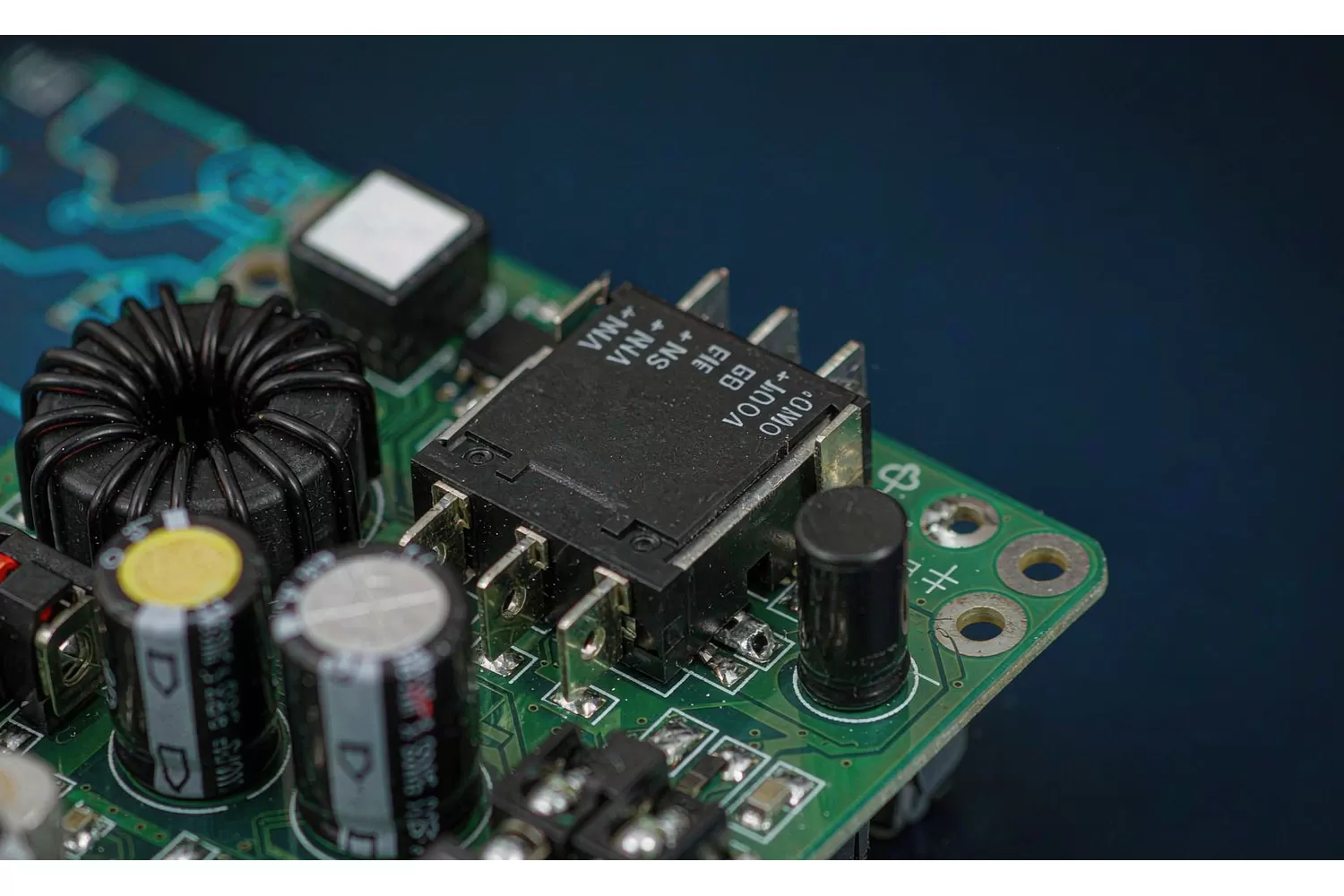
Every modern electronic device that runs on a battery or a higher-voltage bus eventually needs to create a lower, stable rail for its logic. The circuit that does this efficiently is the buck converter — also called a step-down DC-DC converter. It is one of the most pervasive building blocks in power electronics, and choosing the right one (and sourcing it reliably) is a daily concern for hardware teams.

How a buck converter actually saves power
A linear regulator simply throws away the voltage difference as heat. A buck converter, by contrast, chops the input and uses an inductor-capacitor filter to average it, so most of the energy reaches the load. That efficiency is why a phone can run a 1.8 V core from a 3.7 V battery without melting, and why an industrial controller can derive several logic rails from a 24 V bus without a heatsink the size of the board.
Picking the right device for the rail
For a high-current main rail, a synchronous buck regulator with integrated switches is the usual choice. Devices such as the TPS54622, the TPS54302 and the TPS54331 are commonly referenced where a 3 A to 6 A step-down rail is needed from a 12 V or 5 V input. When the downstream section is noise-sensitive — a precision ADC, a PLL, a sensor — designers often follow the buck with a low-noise LDO such as the LM1117-3.3 to clean up the rail.
Layout and the parts around the IC
The inductor, the input and output capacitors, and the feedback divider determine whether a buck converter is stable and quiet or a source of ripple and EMI. Sourcing the right regulator is only half the job; the bill of materials around it has to be complete. We help by supplying the regulator, the post-regulation LDO and the supporting passive families from traceable channels so a build is not stalled by a single missing line.
Sourcing for a long-lived supply chain
Power rails rarely change, but the parts that implement them go through lifecycle and allocation cycles. Browse the full power management chip range, or tell us the exact regulator and LDO part numbers your schematic calls for and we will quote stock, date code and inspection options.
Frequently asked questions
What does a buck (step-down) DC-DC converter do?
A buck converter steps a higher input voltage down to a lower, regulated output. It switches an internal transistor on and off and uses an inductor and capacitor to average the result, so it can deliver a lower voltage than the input with high efficiency. It is the workhorse behind almost every board that runs a lower-voltage logic rail from a higher battery or bus voltage.
Where are buck converters used most?
Anywhere a system has one supply but needs several lower rails: a 12 V or 24 V industrial bus feeding 5 V and 3.3 V logic, a single-cell or multi-cell battery feeding a 1.8 V core, or a 5 V USB input feeding a 3.3 V sensor rail. Because they waste little power as heat, buck converters are preferred over linear regulators whenever the voltage drop is large or the load current is high.
How do I choose between a buck IC and an LDO?
Use an LDO for very small drops, low noise and simplicity. Use a buck converter when the input-to-output difference is more than a volt or two, or when the load draws more than a few hundred milliamps, because a linear regulator would otherwise dissipate too much heat. Many designs use a buck for the main rail and an LDO afterwards to clean up the noise for a sensitive section.
Can you supply buck and point-of-load regulators?
Yes. We stock synchronous buck regulators, step-down controllers and supporting LDOs commonly referenced in portable and embedded power designs. Send the exact part numbers, package and quantity and we will quote availability and date code.
About us & trademarks: JTDZ Tech (Shenzhen Jingteng Electronics Technology Co., Ltd.) is an independent distributor of electronic components. We are not an authorised distributor or representative of the manufacturers named in this article. Manufacturer and part names are used for indicative purposes only, to help identify the components discussed; all trademarks remain the property of their respective owners. Always verify specifications against the manufacturer's datasheet before design-in or purchase.
