
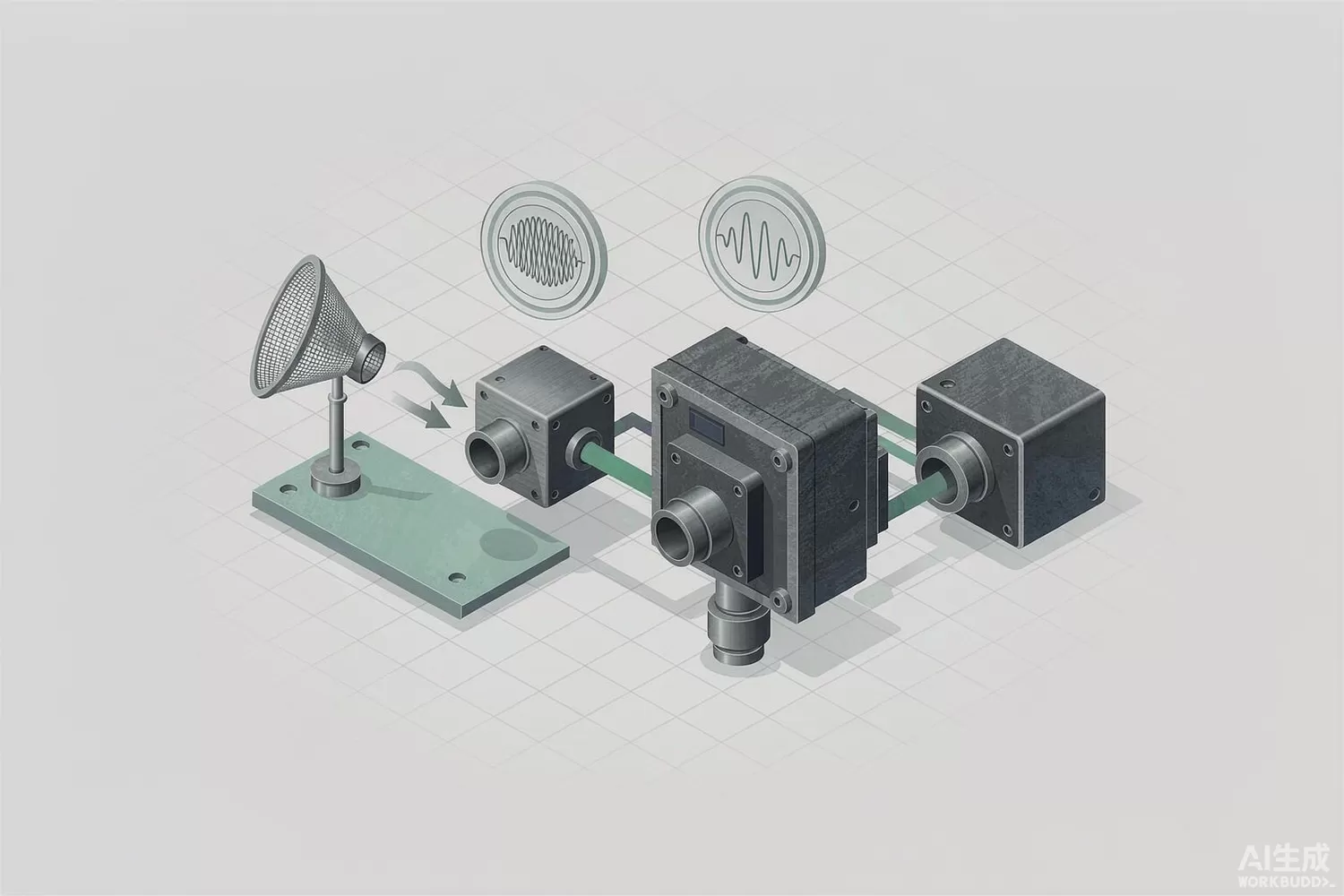
Frequency conversion is the least glamorous and most unforgiving block in a radio. A mixer is a multiplying element: put two signals in and you get their sum and difference, plus harmonics, spurs and cross-products of everything else present at either port. The entire frequency plan of a system — the intermediate frequency, the image response, the harmonic relationships, the filter positions — is built around the mixer's behaviour. Get it right and the rest of the chain is straightforward; get it wrong and no amount of downstream filtering fixes the spurs.

Application logic: the conversion plan and its level budget
Mixers come in two families, and the choice drives everything downstream. A passive double-balanced mixer, usually built on a diode ring or a FET quad, is intrinsically linear and works from DC to tens of gigahertz, but it has conversion loss — typically six to nine decibels — so the following stage must recover the level and, more importantly, must not destroy the dynamic range the mixer just preserved. An active mixer or a mixer with an integrated LO driver produces conversion gain and accepts a low LO drive, which makes the LO distribution simpler and reduces the number of amplifier stages, at the cost of supply current, noise and a dependency on LO cleanliness.
The parameters that decide a design are conversion gain or loss, input third-order intercept, noise figure, LO drive range, RF-to-LO and LO-to-RF isolation, DC offset and port matching. Isolation deserves particular attention because it becomes an EMC and a synthesiser-stability problem rather than a datasheet curiosity. Where image rejection or single-sideband generation must be guaranteed over temperature and lot, an integrated quadrature (I/Q) modulator or demodulator is almost always the better engineering answer than a hand-matched discrete pair, because the phase and amplitude balance that produce image suppression are matched on the die. This is the same discipline that makes satellite up/down-converter chains and point-to-point microwave backhaul so sensitive to the first conversion stage, and it is why instrument signal chains commonly use two or even three conversions: the spurs have to land somewhere harmless.
Modern systems add two constraints that older designs could ignore. First, multi-band operation means the same converter must serve several frequency plans, which pushes designs towards wideband mixers with matched baluns rather than narrowband tuned ports. Second, software-defined architectures put the conversion later and later in the chain, sometimes after the analogue-to-digital conversion, which moves the mixer's job into digital hardware and leaves the analogue part responsible only for the image and the dynamic range.
New technology in mixers and converters
- Integrated LO buffer amplifiers with limiting behaviour, so a wide range of LO drive levels produces a stable conversion gain.
- Silicon-based passive mixers with on-chip baluns, which bring the linearity of a diode-ring topology into a surface-mount package with predictable matching.
- Integrated image-reject and single-sideband modulators, moving image suppression from board matching to die-level balance.
- Millimetre-wave up/down-converters with integrated multipliers, so a lower-frequency LO can drive a Ka-band chain without a discrete multiplier cascade.
- Mixer-first receiver architectures that exploit passive mixers' linearity and the following transimpedance stage to achieve high blocker tolerance.
- Multi-function MMIC blocks that combine a mixer, an amplifier and a switch in one die, reducing part count in phased-array channels.
Domestic alternatives: what to analyse before switching
- Re-run your frequency plan, not just the bandwidth: an alternative mixer with the same frequency coverage can have a different port configuration and different spurious behaviour.
- Compare conversion loss or gain at the LO drive level you will actually deliver, not at the drive level of the evaluation board.
- Check the isolation figures at your frequencies; LO leakage changes the EMC and the synthesiser pull picture.
- Ask for two-tone data with your tone spacing, and for the intercept point at the test level you will operate at.
- Confirm the package and impedance environment, including whether an external balun is required and what its loss will be.
- Decide between packaged and die options early: some domestic MMIC suppliers offer both, and the die route changes assembly and test cost.
Indicative cost comparison: imported originals vs domestic candidates
Price figures below are indicative public-market reference ranges for moderate volumes, compiled from publicly observable listings. They fluctuate with the spot market, package option, grade (industrial, automotive, screened) and order quantity, and must not be read as a quotation. Ask us for a firm price on your exact part numbers and quantities.
| Device class | Common imported reference | Indicative imported unit price | Commonly referenced domestic candidate | Indicative domestic unit price |
|---|---|---|---|---|
| Passive double-balanced mixer, 1.5–8 GHz, packaged | ADI HMC-series passive mixers; Mini-Circuits level-7-class mixers | USD 12–35 | BR9132EA / BR9134EA / BR9136FDJ class (Bonray); Milliway MWM2xxx series | USD 5–16 |
| Active mixer with integrated LO driver, 1–3.5 GHz | ADI HMC-series active mixers; Linear/ADI level-13-class | USD 8–22 | BR9133EA / BR9133LD class (Bonray); Milliway active mixers | USD 3.5–10 |
| Millimetre-wave mixer, 24–42 GHz (Ka band) | ADI HMC520-class millimetre-wave mixer | USD 60–200 | Milliway ML5210-class (26–40 GHz); Zhenxing ZMX520-class (24–42 GHz) | USD 30–95 |
| I/Q modulator / image-reject up-converter | ADI quadrature modulators; HMC-series I/Q mixers | USD 15–60 | Domestic quadrature and image-reject converters (family level in public sources) | USD 8–30 |
Two cost notes. First, the mixer is usually a small fraction of the RF BOM, but a spurious problem created by a substitution can cost a redesign of the intermediate-frequency filter — a filter that may be larger and more expensive than the mixer itself. Judge the swap on the whole conversion chain. Second, die-level sourcing looks much cheaper per unit and then adds assembly, wire-bonding and test cost; run the numbers with your contract manufacturer before assuming a die price applies to your product.
Commonly referenced alternative models
| Imported original (reference) | Domestic candidate (public sources) | Why it is referenced |
|---|---|---|
| ADI HMC520 — millimetre-wave mixer, 22–44 GHz | Milliway ML5210-class (26–40 GHz); Zhenxing ZMX520-class (24–42 GHz) | Listed in publicly circulated cross-reference discussions for the same Ka-band conversion role. Sources note that linearity and temperature stability should be validated against the imported part for critical links. |
| ADI HMC-series passive mixer, 3–8 GHz | Bonray BR9132EA (doubly balanced passive mixer, 3–8 GHz, eMSOP8) | Publicly documented as a passive double-balanced mixer in the same band, with an integrated balun structure. Compare the LO drive level and the IF bandwidth you need. |
| ADI HMC-series passive mixer, 1.5–4.5 GHz | Bonray BR9134EA / BR9134LD (1.5–4.5 GHz) | Same conversion role with a documented IF range up to 1.5 GHz; packaged and die options exist, which matters for phased-array tiles. |
| ADI HMC-series active mixer with LO driver | Bonray BR9133EA / BR9133LD (1.0–3.5 GHz, integrated LO driver) | Offered as a high-linearity alternative that accepts a low LO drive, simplifying LO distribution. |
| Imported active mixer, 0.6–3 GHz | Milliway MWM2005 / MWM2025 (0.6–3 GHz, integrated LO amplifier) | Publicly documented active mixers supporting both up- and down-conversion, with IF coverage up to 2 GHz. |
| Imported wideband mixer, 0.4–2.7 GHz | Milliway MWM2008Q (400–2700 MHz, integrated LO buffer and RF amplifier) | Cross-referenced for wideband receiver front ends; verify the intercept point at your LO drive. |
We supply imported mixer and converter hardware, including parts such as the HMC224MS8ETR passive mixer and ADA-4543-TR1G gain block for the amplifier stages around the conversion, alongside the Broadcom / Avago collection, the Mini-Circuits collection and the wider RF and interface chip collection. Send us the RF, LO and IF plan and we will quote the conversion chain end to end.
Frequently asked questions
Frequently asked questions
What decides mixer performance in a real radio?
Conversion loss or gain, third-order intercept, LO drive level and isolation. Isolation is the one people forget: LO leakage at the RF port radiates, and RF-to-LO leakage can pull the synthesizer. A mixer is also the block where multi-tone intermodulation is created, so its linearity sets how gracefully a receiver behaves when a strong signal appears next door.
Passive or active mixer — how do I choose?
Passive double-balanced mixers offer high linearity, DC-to-microwave coverage and no supply noise, at the cost of conversion loss that must be recovered by the following stage. Active mixers with an integrated LO driver accept a low LO level and can provide conversion gain, which simplifies the amplifier budget but adds supply consumption and depends on the LO drive being clean.
When does an in-band quadrature modulator beat a discrete mixer chain?
Whenever image rejection and sideband suppression have to be guaranteed in production. An I/Q modulator integrates the two mixers, the phase splitter and often the amplifier, so the image is suppressed by matched on-chip structures instead of by hand-matched board components that drift with temperature and lot.
Do you supply mixers and converters for both narrowband and microwave work?
Yes. We quote passive and active mixers, I/Q modulators, and the amplifier, filter and LO parts around them, from imported brands and from domestic MMIC suppliers, including die and packaged options. Send the RF, LO and IF plan with your level diagram and we will propose a chain.
About us & trademarks: JTDZ Tech (Shenzhen Jingteng Electronics Technology Co., Ltd.) is an independent distributor of electronic components. We are not an authorised distributor or representative of the imported manufacturers named in this article. Manufacturer, brand and part names are used for identification purposes only; all trademarks remain the property of their respective owners. Cross-reference information in this article is based on publicly available sources, is subject to change, and is not a substitute for your own engineering validation. Always verify specifications against the manufacturer's datasheet before design-in or purchase.
