
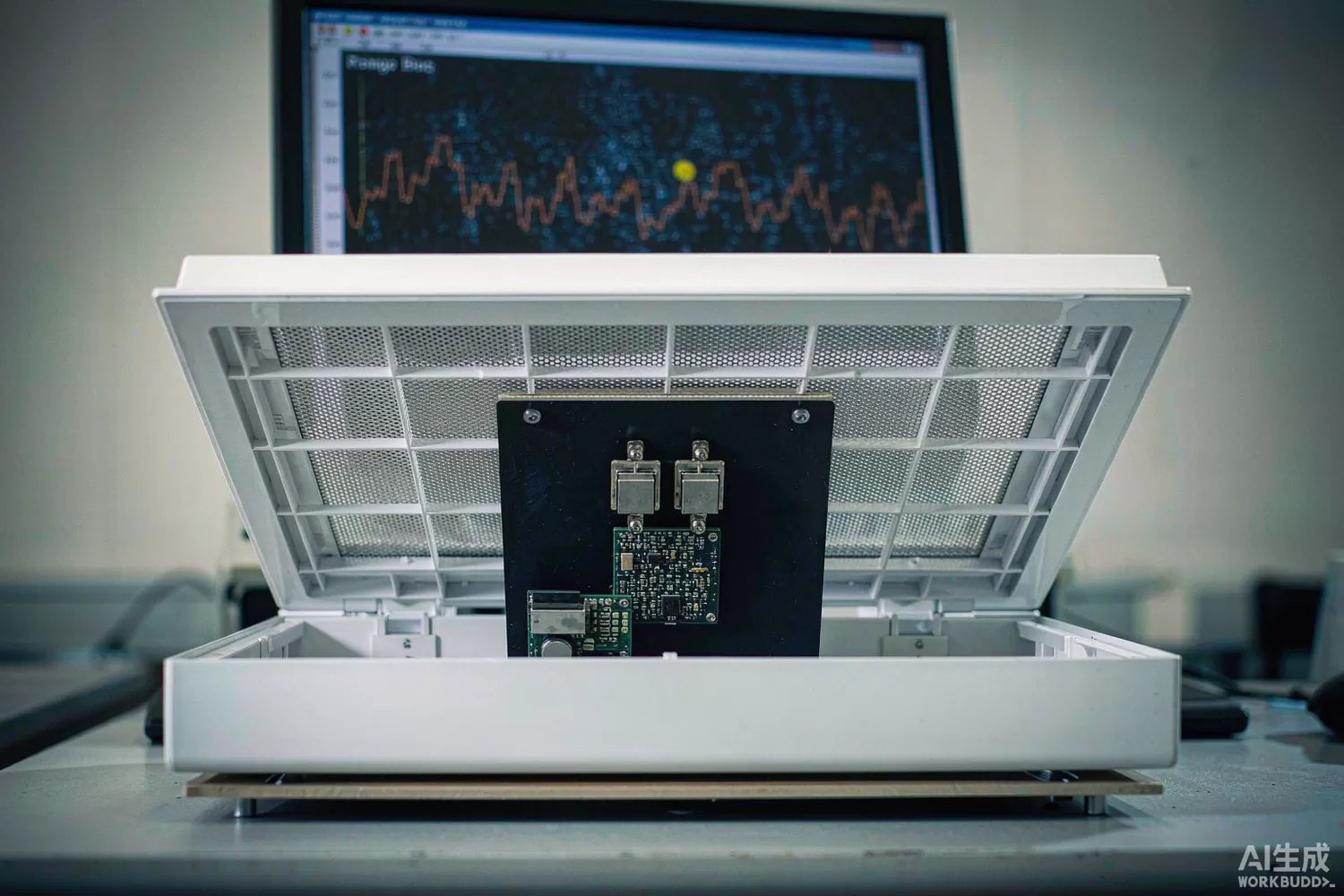
Long before 60 GHz presence sensors and 77 GHz automotive arrays, the 24 GHz K-band was doing quiet industrial work: motion-activated lighting, door and gate control, traffic-flow detection, security volumetric sensing. Today the band has a second life, because a new generation of single-chip K-band radar SoCs — complete FMCW transceivers with ADCs, DSP accelerators and microcontrollers on one CMOS die running at microampere-class average current — has moved it from discrete-module economics into consumer and battery-powered products. This article explains the sensing logic, the parameters that decide false-alarm behaviour, the technology trends, and the domestic supply with concrete part numbers. For the neighbouring bands and their different compromises, see our 60 GHz presence-sensor article and the automotive FMCW overview.

Application logic: what K-band sensing does well
24–24.25 GHz is an ISM allocation with relaxed radio rules and long tradition. The physics gives it a specific profile: range resolution of tens of centimetres per 250 MHz of sweep bandwidth (fine for motion, coarse versus 60 GHz imaging), modest antenna size with ordinary PCB processes, and enough wavelength (≈12 mm) that Doppler sensitivities and antenna tolerances are forgiving. The application logic:
- Motion detection as the core job — Doppler and short-chirp FMCW waveforms report radial velocity and rough range; lighting, door openers, intrusion zones and vehicle/traffic detectors need exactly this and nothing more, which is why the band's coarser resolution rarely matters there.
- Micro-motion and life-presence extensions — modern parts with low modulation error resolve breathing-level micro-Doppler, extending K-band into stationary-presence applications once exclusive to 60 GHz — at lower silicon cost and with easier antenna design.
- Through-plastic sensing — radar sees through enclosure plastic and glass; K-band antennas tolerate larger tolerances than 60 GHz, letting the sensor hide inside a luminaire or appliance housing without a RADOME-grade surface finish.
- Duty-cycled battery operation — current-generation SoCs integrate power management and sleep everything but a wake timer, achieving 50–60 µA average current at a few-per-cent duty cycle — battery-powered doorbells, luminaires and locks became possible the day these parts shipped.
- Multi-target and cascade extension — 2T4R-class parts add angle estimation and chip-to-chip cascading for longer range and multi-object tracking, overlapping with entry-level automotive and traffic applications.
- Coexistence discipline — the ISM band hosts Wi-Fi-adjacent equipment and other radars; waveform agility (chirp shape, PRF) and CFAR threshold discipline are the anti-interference tools, and per-installation coexistence checks belong in commissioning.
Parameters that decide false-alarm behaviour
- Average current at your duty cycle — headline µA-class numbers belong to specific duty cycles and detection profiles; verify the number for your wake schedule, not the vendor's demo profile.
- Frequency modulation error — chirp linearity directly sets clutter floor and minimum detectable motion; sub-0.1 %-class modulation error separates presence-capable parts from motion-only ones.
- RX noise figure and TX output power together — their ratio bounds detection range; a part with strong TX and a noisy RX loses to a balanced one at the same current.
- PLL phase noise — close-in phase noise floors the Doppler processing and decides whether a fan, a swaying curtain or a pet registers as a target; demand offset-resolved tables.
- On-chip signal-processing depth — hardware FFT, CFAR and clustering reduce host load and make behaviour reproducible across firmware teams; a SoC with real accelerators shortens the path to a stable product.
- Angular capability — 1T1R parts report motion without direction; 2T4R parts estimate angle and enable tracking; the antenna design (and its cost) follows from this choice.
- Interfaces and configurability — I2C/SPI/UART configuration plus GPIO-style detection outputs; a part configurable through a UART CLI shortens commissioning more than any datasheet row.
What is changing in K-band sensor radar
Three shifts define the current generation. First, the µA-class battery SoC: integrating PMIC, wake timer and signal processing on die dropped whole-sensor average current from tens of milliamperes to tens of microamperes — a thousand-fold change that moved K-band from wired luminaires into battery doorbells, occupancy sensors and smart locks. Second, algorithm-level productisation: vendors now ship reference firmware for presence, micro-motion and tracking with configuration tools, so an integrator commissions a sensor by parameter selection rather than by writing a DSP pipeline; the differentiator has moved from RF silicon to algorithm packaging. Third, cascade and angle expansion: 2T4R parts with chip-to-chip cascading bring kilometre-class outdoor detection and multi-object tracking within reach of the band, overlapping traffic and perimeter applications — while 60 GHz and 77 GHz arrays keep the imaging-tier workloads. The sourcing consequence: K-band sensor SoCs are now a commodity-adjacent category where integration, tooling and firmware support decide purchases, an environment where domestic vendors compete natively. For the system-level sensing picture, our IoT sensor-node article places radar among the sensing options.
Domestic suppliers and indicative cost
Domestic supply leads this specific tier. SiliconRadar (Silidian, Shanghai) publishes the S3KM111L (ICL1112) 24–24.25 GHz 1T1R radar SoC: single-chip CMOS with integrated PMIC, PLL, 16-bit ADC, DSP accelerators (super-resolution, CFAR), −97 dBc/Hz-class PLL phase noise, 0.045 %-class modulation error at 250 MHz sweep, about 55 µA average current at low duty cycle, and detection beyond 150 m in motion profiles; the same vendor ships AiP-package variants (antenna-in-package, QFN with integrated antennas) and the ICL1240-class 2T4R part for angle and cascade applications. Additional domestic radar-SoC vendors serve the lighting and security volume market at family level. Imported anchors — Infineon's XENSIV BGT24-class 24 GHz transceivers and legacy discrete Doppler modules — remain the qualification references in export programmes. Where only family-level information is public, the table says so; verify detection profiles against your enclosure and mounting geometry.
A detection bench is quick to assemble from catalogue stock: a Cosine COS9061TR micro-power op amp buffering the sensor's analog monitor outputs, a Cosine COS2991S LDO for battery-representative rails, a Titan Micro TS2502PN on the interface ports, and an Artery AT32F403ACGT7 logging detection events against a scripted target-motion rig.
Price figures below are indicative public-market reference ranges for moderate volumes, compiled from publicly observable listings. They fluctuate with the spot market, package option, grade (industrial, automotive, screened) and order quantity, and must not be read as a quotation. Ask us for a firm price on your exact part numbers and quantities.
| Function (imported anchor) | Example import part / class | Indicative import price (USD) | Domestic candidate | Indicative domestic price (USD) |
|---|---|---|---|---|
| K-band 1T1R radar SoC | Infineon BGT24-class transceiver + external processing | 3.5 – 7.0 (chip set) | Silidian S3KM111L / ICL1112 (single-chip with PMIC+DSP) | 1.5 – 3.5 |
| AiP sensor module (antenna-in-package) | Import AiP classes (60 GHz dominated) | 4 – 9 | Silidian AiP variants (24 GHz, family level) | 2.0 – 4.5 |
| 2T4R angle-capable SoC | Import 24/60 GHz multi-channel classes | 6 – 12 | Silidian ICL1240-class (2T4R, cascade) | 3.0 – 6.5 |
| Legacy Doppler motion module | Discrete HB100-class modules | 0.5 – 1.5 | Domestic discrete modules (family level) | 0.2 – 0.6 |
| Reference low-power op amp | TLV9061-class micro-power | 0.3 – 0.8 | COS9061TR (Cosine) | 0.08 – 0.25 |
| Battery-representative LDO | Classic 150 mA LDO classes | 0.3 – 0.8 | COS2991S (Cosine) | 0.08 – 0.25 |
| Test-harness MCU | STM32-class general purpose | 1.2 – 3.0 | AT32F403ACGT7 (Artery) | 0.4 – 0.9 |
Read the table as a screening tool, not a quotation. The practical reality: in this tier the domestic lead is structural, not opportunistic — the leading domestic SoC integrates more function on die (PMIC, ADC, DSP, MCU-class processing) than the imported chip sets, prices at half or less, and is supported by Chinese-language firmware tooling, which is why it has become the default in domestic lighting, security and smart-home volumes. The imported 24 GHz parts retain ground in export programmes with established qualification trails. The honest watch-item is firmware: radar sensor behaviour lives as much in the shipped algorithm package as in the RF, so evaluate the reference firmware's presence and micro-motion profiles against your own enclosure and mounting geometry before committing a platform.
Validation flow before you commit
Validate the sensor inside your product, behind your plastic. Bench-characterise average current at your real duty cycle and detection profile, then run detection trials on a scripted motion rig: walking, sitting-still, breathing at rest, pet-scale motion and curtain/fan interference, each at the range corners your spec claims. Repeat behind production enclosures — plastic thickness and paint shift both sensitivity and clutter. Measure false-trigger rates over 72-hour unoccupied runs at three mounting geometries; false alarms, not missed detections, generate field support calls. Verify coexistence with any wireless transmitters sharing the product, and check regulatory conformity of the final chirp plan in your target markets. Finally, burn firmware revisions into regression: radar firmware changes silently alter detection footprints, and your commissioning tool must version-lock them.
Frequently asked questions
Why choose 24 GHz over 60 GHz for presence sensing?
24 GHz parts cost roughly half, tolerate simpler antennas and enclosures, and now resolve micro-motion well enough for stationary presence. 60 GHz wins where finer range resolution, tighter beams or regional spectrum strategy justify the premium - both bands coexist in product portfolios.
Can a 24 GHz SoC really run on a battery for years?
The current single-chip parts average around 55 microamperes at low duty cycles with integrated PMIC and wake timers; on a typical 2000 mAh cell that projects to multi-year life - validate at your own duty cycle, not the demo profile.
What causes false triggers in radar motion sensors?
Fans, swaying objects, pets and multipath through walls. CFAR threshold discipline, range gating in the reference firmware and commissioning-time geometry tuning are the practical controls - all firmware-level, so evaluate the vendor's algorithm package.
Are domestic radar SoCs a safe replacement for imported parts?
In this sensor tier the domestic lead part integrates more on die at roughly half the price and dominates domestic volume production; export programmes with existing qualification trails should verify firmware tooling and long-term availability before switching.
About us & trademarks: JTDZ Tech (Shenzhen Jingteng Electronics Technology Co., Ltd.) is an independent distributor of electronic components. We are not an authorised distributor or representative of the imported manufacturers named in this article. Manufacturer, brand and part names are used for identification purposes only; all trademarks remain the property of their respective owners. Cross-reference information in this article is based on publicly available sources, is subject to change, and is not a substitute for your own engineering validation. Always verify specifications against the manufacturer's datasheet before design-in or purchase.
