
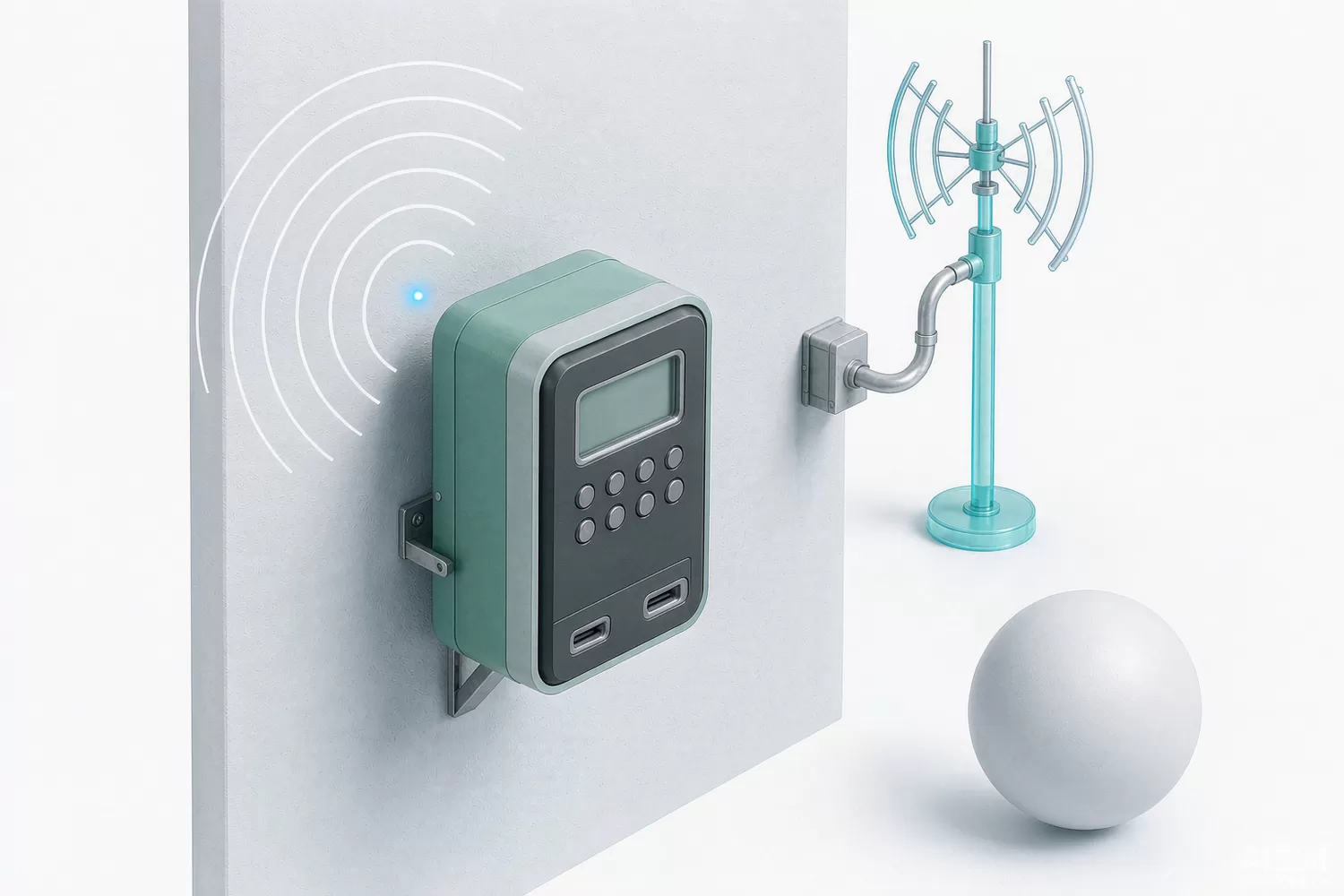
Cellular IoT chips sit in an odd place in a BOM: they are the most expensive silicon on a smart meter, tracker or point-of-sale terminal, and also the component most tightly bound to network roadmaps. The retirement of 2G and 3G pushed a migration wave through the installed base, and the result is a three-tier market — narrowband NB-IoT for the cheapest fixed sensors, Cat.1 bis for anything that needs mobility or moderate data, and 5G RedCap for the next generation of industrial devices. All three tiers are now served by Chinese chipset vendors as well as the imported incumbents.

Application logic: what a cellular IoT radio has to get right
A cellular IoT modem is a complete radio system on a die: RF transceiver, baseband, protocol stack, and increasingly the application processor. The system-level questions that decide the product are unglamorous but decisive. First, band coverage: a tracker that must roam across regions needs a front end that covers the operator bands of every target market, and that is where the transmit chain, duplexer and antenna switch all interact. Second, power: the average current is set by how the device uses PSM and eDRX, not by peak transmit power, so a chip with a good sleep architecture beats a chip with a slightly better PA. Third, antenna design: a 700–900 MHz link inside a sealed metal enclosure is a hard problem, and matching loss directly reduces the usable link budget. Fourth, certification: cellular products need operator and regulatory approvals, and the depth of the vendor's certification dossier saves months of schedule. Our LNA receiver guide and RF filter coexistence guide cover two of the RF pieces around the modem.
New technology in cellular IoT
- Integrated front ends: modem SoCs increasingly embed the PA, LNA and antenna switch, which removes external RF parts and simplifies matching at the cost of flexibility.
- Cat.1 bis optimisation: single-antenna receive chains and reduced bandwidth cut die cost and current for the mid-tier category.
- 5G RedCap: NR-designed silicon for wearables, industrial gateways, cameras and routers, positioned between LPWA and full eMBB modules.
- Release 17/18 NTN support: the same baseband increasingly supports satellite links, which turns a terrestrial modem into an anywhere-coverage device.
- On-chip application cores: integrated Cortex-M or RISC-V subsystems let products drop an external host MCU.
Domestic alternatives: what to analyse before switching
- Map bands to markets: verify each supported band against the operators you sell into, and check guard-band and in-band NB-IoT variants separately.
- Measure real standby current with your own PSM/eDRX profile — datasheet sleep figures are usually measured under ideal conditions.
- Ask for the certification dossier: carrier approvals, GCF/PTCRB status, and regional type approval evidence.
- Review the software stack and toolchain: AT command compatibility, OTA update path, and whether the SDK is documented in a language your team can maintain.
- Check the host interface options (USB, PCIe, UART, SPI) against your architecture, and the memory footprint of the stack.
- Plan a second source at module level even if the SoC comes from a single vendor.
Indicative cost comparison: imported originals vs domestic candidates
Price figures below are indicative public-market reference ranges for moderate volumes, compiled from publicly observable listings. They fluctuate with the spot market, package option, reel size and order quantity, and must not be read as a quotation. Ask us for a firm price on your exact part numbers and quantities.
| Device class | Common imported reference | Indicative imported unit price | Commonly referenced domestic candidate | Indicative domestic unit price |
|---|---|---|---|---|
| NB-IoT modem SoC | Qualcomm QCX216 class; Sequans Monarch 2 class | USD 3.5–7.0 | EC618 / EC718-class NB-IoT SoCs (EigenComm) | USD 1.4–3.0 |
| LTE Cat.1 bis modem SoC | u-blox UBX-R5 class; Sequans second-generation parts | USD 5.0–9.5 | ASR1603 / ASR1606-class Cat.1 bis SoCs (ASR Micro) | USD 2.0–4.2 |
| 5G RedCap modem SoC | Early imported RedCap modem platforms | USD 14–30 | Domestic RedCap SoCs (e.g. UNISOC RedCap-class platforms) | USD 7–16 |
| Cellular IoT module (integrated, ready to solder) | Imported module with certified stack | USD 9–22 | Domestic module built on the SoCs above | USD 4–11 |
Two cost notes that people miss. First, the RF front-end parts around the modem — PA, antenna switch, duplexer, SAW filters — are 15–30 percent of the radio BOM, and domestic sources for those parts now exist as well, so evaluate the whole chain rather than the modem alone. Second, the migration from 2G to Cat.1 bis or NB-IoT is usually driven by network shutdown dates rather than by BOM cost, so the real comparison is schedule risk versus unit cost: a certified domestic platform that is already approved in your target market can be worth more than a nominally cheaper chip that adds six months of approval work.
Commonly referenced alternative models
| Imported original (reference) | Domestic candidate (public sources) | Why it is referenced |
|---|---|---|
| Qualcomm QCX216 — LTE Cat.1 bis modem SoC | ASR1603 / ASR1606-class Cat.1 bis SoCs | Same single-antenna LTE category and similar integration level; compare sleep current and stack maturity. |
| Sequans Monarch 2 — NB-IoT / LTE-M modem | EC618 / EC718-class NB-IoT SoCs | Publicly documented LPWA platforms with integrated front end; confirm band support per market. |
| u-blox UBX-R5 — cellular IoT SoC with GNSS | Domestic LPWA SoCs plus a separate GNSS receiver | Substitution here often means splitting the function into two chips, which changes BOM and board area — model it before committing. |
| Full 5G NR Cat.4 module silicon | UNISOC RedCap-class platforms | RedCap lowers cost and power for industrial devices; verify operator support in your deployment regions. |
Where only family-level names are public, we list families on purpose. Modem SoC part numbers, band variants and firmware revisions change quickly, so always request the current product brief and errata list before you freeze a design.
Validation checklist
- Field test on the live operator network you will actually sell into, including handover and re-attach behaviour.
- Average current over a full reporting cycle with your real payload size and interval.
- Antenna efficiency inside the finished enclosure, not on a bare board.
- RF coexistence against GNSS, Wi-Fi or Bluetooth radios on the same product.
- Regulatory and carrier approval path, with the vendor's existing certifications documented.
- Supply continuity plan covering at least 24 months of forecast volume.
Related reading on our blog
RF chips in IoT and wireless sensor nodes · RF chips in 5G base stations · RF filter selection guide
Frequently asked questions
Why is Cat.1 bis suddenly the volume category?
Because 2G and 3G networks are being retired while many products need more than NB-IoT can carry — voice, moderate data rates, mobility and lower latency. Cat.1 bis reuses LTE infrastructure with a single receive chain, which pulls cost and power close to what NB-IoT offers while keeping a familiar IP data path.
Is RedCap a real replacement for Cat.4 modules?
For many industrial and wearable products, yes in function: RedCap targets lower peak rates, fewer antennas and lower power than full 5G NR. Whether it is cheaper for you depends on module and chipset pricing and on network support in your deployment regions, which varies by operator.
What matters most when choosing a domestic cellular-IoT chip?
Four things: band coverage and RF front-end integration, power-save behaviour (PSM and eDRX timers), the protocol-stack maturity and certification dossier, and the availability of a second source for the module. The radio itself is rarely the hard part.
Do you supply the RF components around the modem as well?
Yes. Beyond the modem SoC or module, we quote the surrounding RF chain — power amplifiers, switches, filters and matching parts — and we can put together a complete BOM package for your board.
About us & trademarks: JTDZ Tech (Shenzhen Jingteng Electronics Technology Co., Ltd.) is an independent distributor of electronic components. We are not an authorised distributor or representative of any manufacturer named in this article. Manufacturer, brand and part names are used for identification purposes only; all trademarks remain the property of their respective owners. Cross-reference information in this article is based on publicly available sources, is subject to change, and is not a substitute for your own engineering validation. Always verify specifications against the manufacturer's datasheet before design-in or purchase.
